Celebrating Bell’s Contributions to America’s 250-year History
Highlighting a Legacy of Flight that Helped Move America Upward
jpg
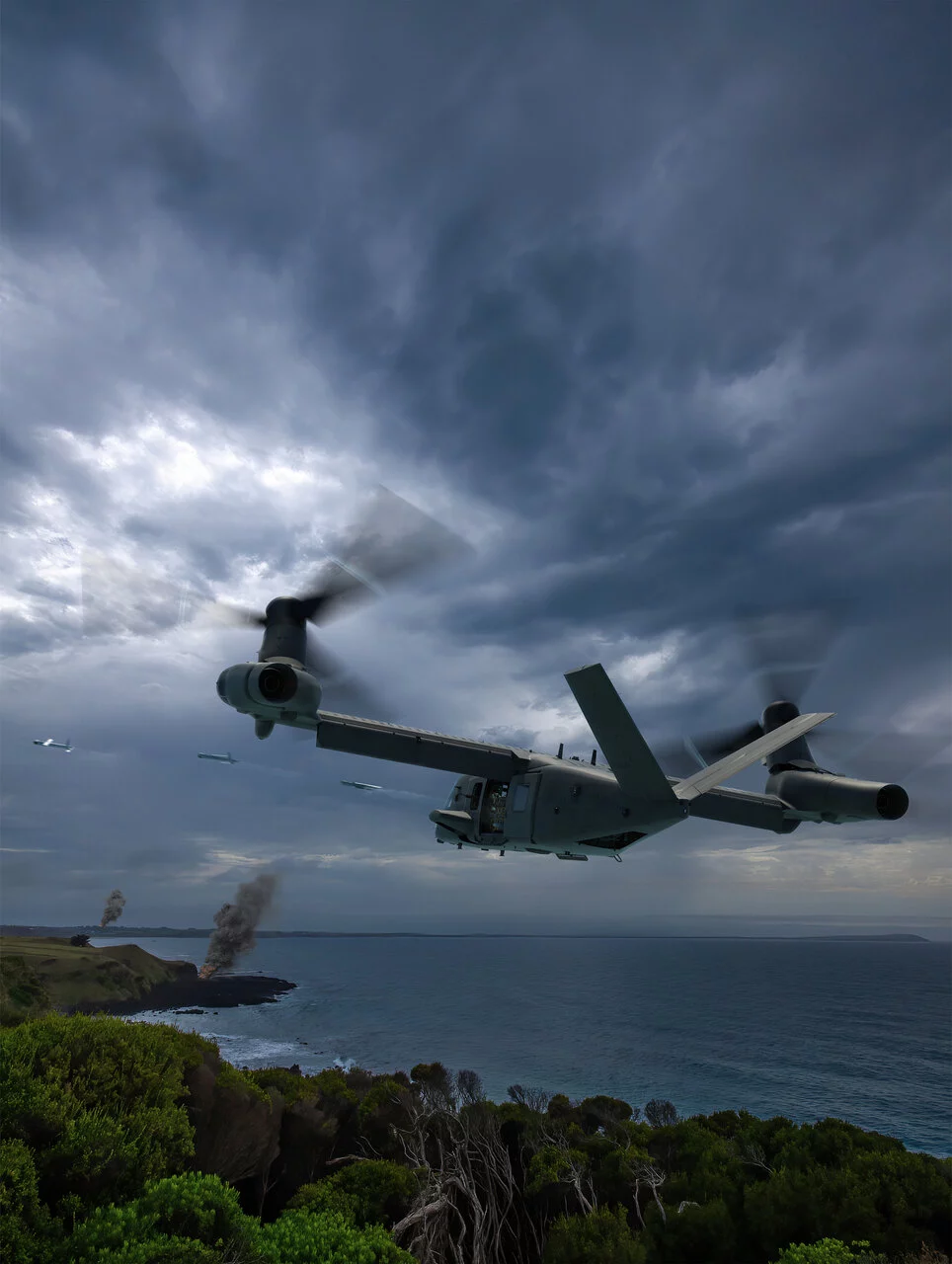
MV-75 Cheyenne
An Enduring Legacy
Since its founding in 1935, Bell’s role in American history has been defined by expanding the frontiers of aviation. For over 90 years, Bell’s iconic legacy has inspired people around the world, thrilling customers and enthusiasts alike.
“Bell is proud to celebrate our nation’s history and the moments where our innovations advanced vertical lift for America,” said Danny Maldonado, president and CEO, Bell. “From supporting those who serve to solving real world challenges, we remain committed to delivering revolutionary technologies that carry our nation forward.”
As America celebrates its 250th birthday, Bell continues its mission to push the boundaries of vertical flight.
Origins of Ingenuity
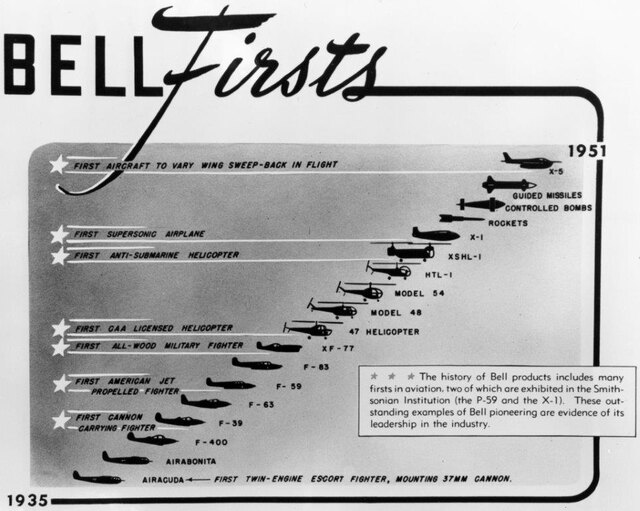
Lawrence “Larry” Bell spent several years in Santa Monica, California, working for prominent early aviation figure, Glenn L. Martin. He rose through corporate ranks and briefly explored another company before deciding to pursue his own ambitions in 1935. It was a special time in American history, shaped by rapid economic and cultural change. The public was becoming increasingly fascinated with aviation, and Bell was ready to challenge their perception of the impossible. He established Bell Aircraft Corporation in Buffalo, New York, and proceeded to change vertical lift technology forever.
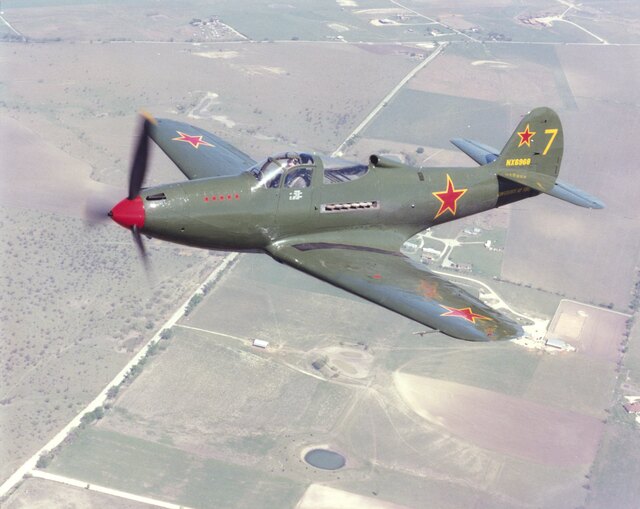
Together with engineer Robert J. Woods, Bell completed a twin-engine fighter, the YFM-1, followed by the P-39 Airacobra in 1937. The P-39 later played a significant role in World War II where its unique capabilities matched the demanding environment. The demand for advanced aircraft during this era drove rapid growth at Bell, enabling expanded operations and new avenues of experimentation.
jpg
108 KB
jpg
37.8 MB
Foundations of Vertical Lift
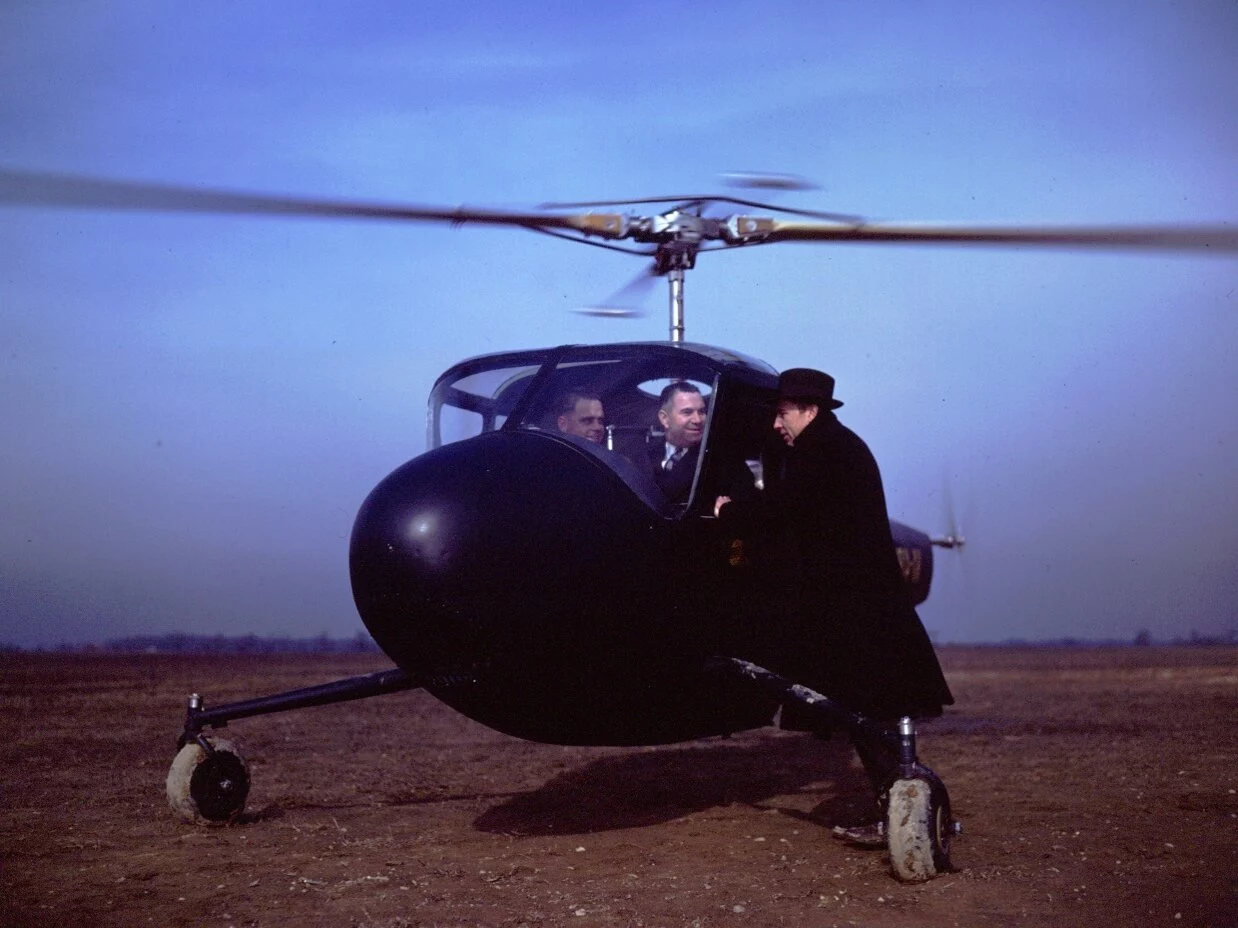
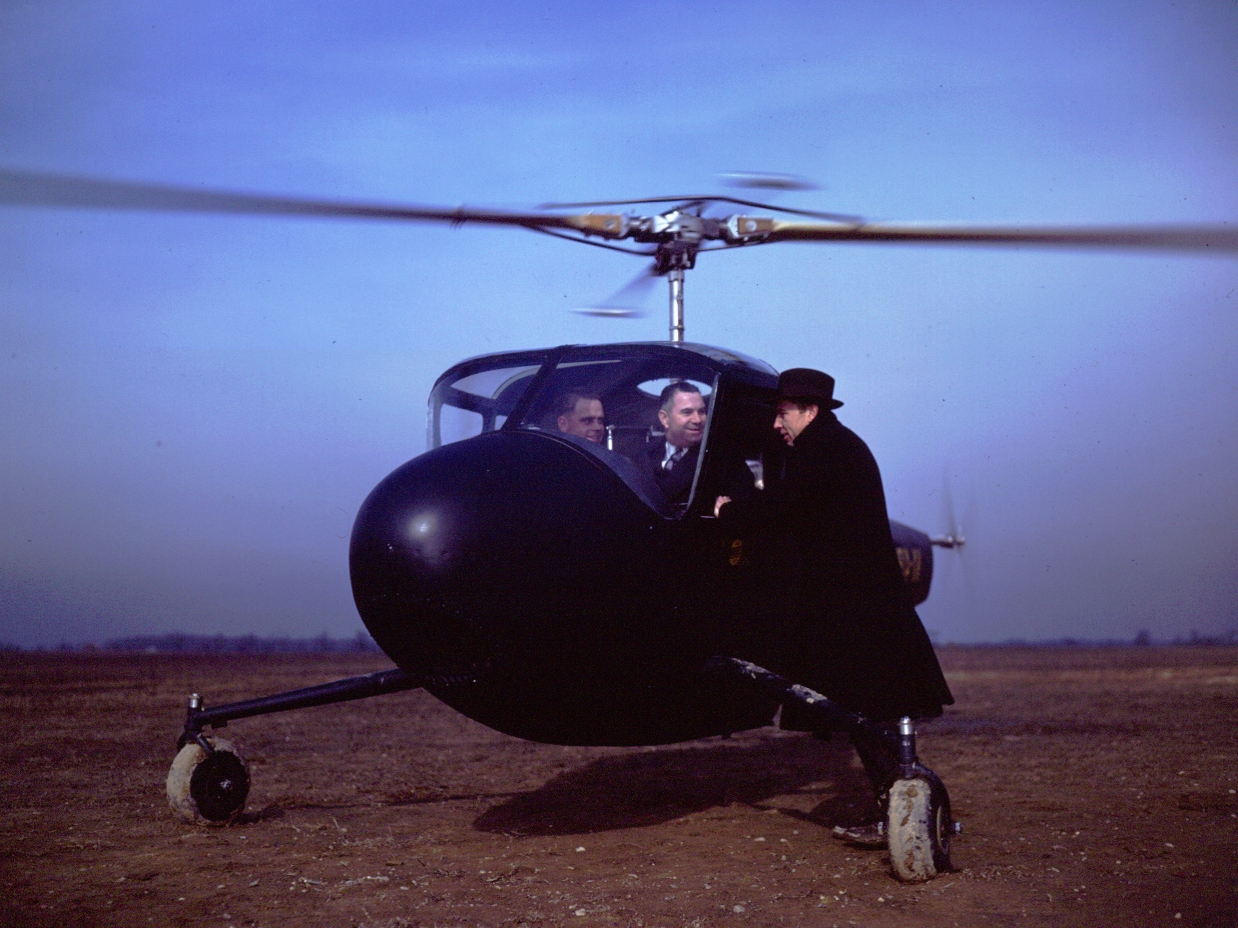
By June 1943, Bell created his first helicopter prototype, Model 30, with the help of a brilliant mathematician named Arthur Young. The success and interest that followed resulted in the development of a new aircraft, the Model 47.
In May 1946, the Bell 47 became the world’s first commercially certified helicopter, paving the way for its extensive adoption across public and private sectors. Its distinctive bubble canopy and reliable performance made vertical flight accessible for the first time, transforming industries from medicine to agriculture. Between 1945 and 1948, Bell helicopters were used in multiple rescue missions from snowy New York to icy Lake Erie and continued to fuel the public’s imagination.
The widespread adoption of the Bell 47 across civilian, military, and commercial roles set a global standard for rotorcraft and became an icon of American innovation.
Bell began searching for a new location for his burgeoning helicopter division. The Fort Worth area offered favorable weather conditions and a growing reputation as a center for innovation and advanced technology. In January 1951, all Bell 47 productions were moved to Hurst, and Saginaw, Texas from Buffalo, New York. Bell acquired the land and facilities to seize an opportunity: solidify themselves as an industrial powerhouse and begin diversifying the company’s footprint.
jpg
1930s: Larry Bell, Floyd Carlson, Arthur Young with Model 30 ship no.2
When Flight Changed Forever
A 1944 contract with NACA, the National Advisory Committee for Aeronautics (known today as NASA) and the U.S. Air Force propelled Bell to complete more advanced experiments. The company opened a new chapter in aerospace history in 1947 when the X-1, piloted by Chuck Yeager, was first to break the sound barrier in level flight. This milestone delivered critical insights that informed future aircraft developments and laid the groundwork for human spaceflight.
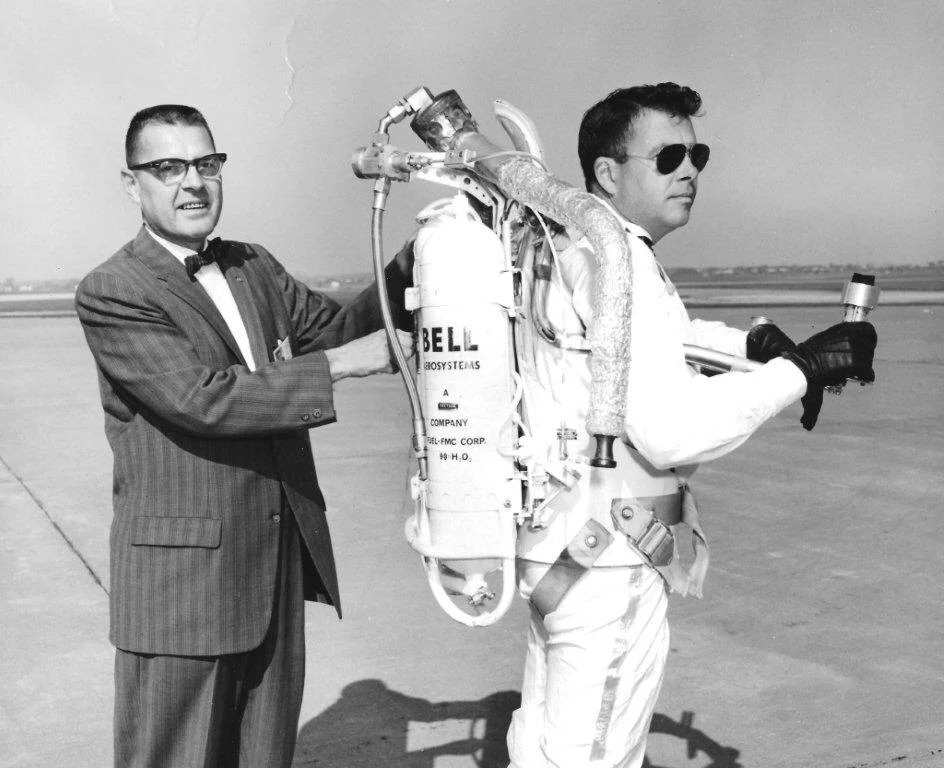
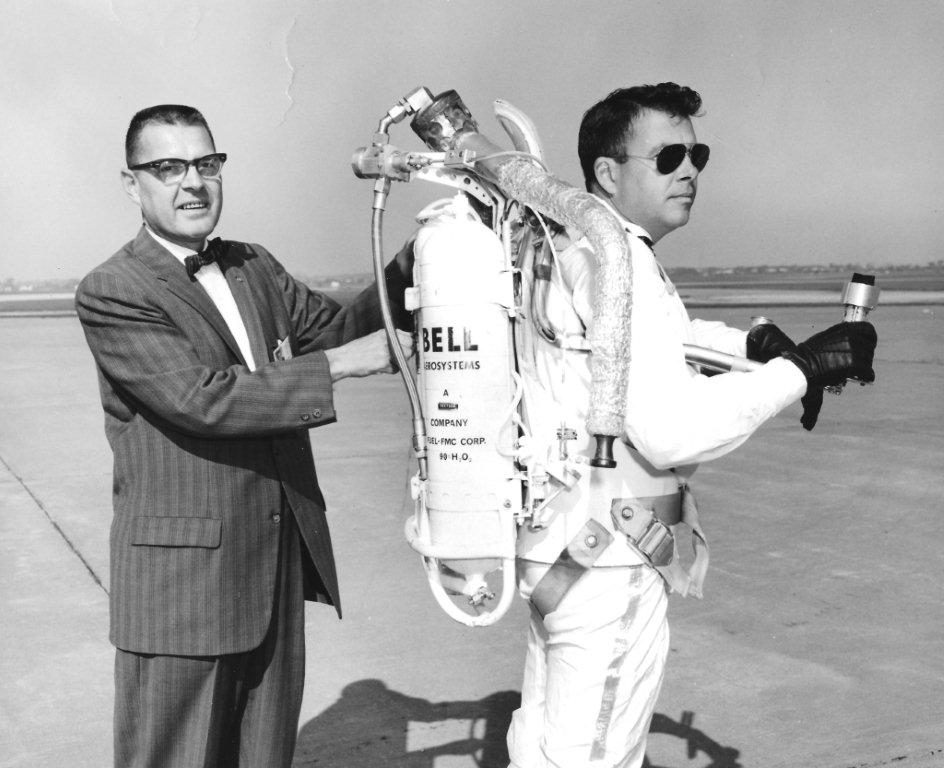
The X-1's success demonstrated what bold and disciplined testing could achieve and set new benchmarks for speed and performance. Its legacy reflects the spirit of progress which has defined America for 250 years. Born from bold vision and collaborative effort, the X-1 even inspired Bell aerospace engineer, Wendell Moore, to develop a personal propulsion device, the Bell Rocket Belt. Moore’s experiment amazed crowds at the Super Bowl, Olympics and more.
jpg
Invented by Wendell Moore, the Bell Rocket Belt Jet Pack took its first flight in 1960.
Driving Breakthroughs Beyond Earth
As Cold War tensions opened a new frontier in exploration, Bell’s expertise in highspeed flight and experimental aerodynamics became integral to America’s early space efforts. Building on its innovative work with the X-1, X-2, and X-5 research aircraft, Bell provided critical airframes that enabled the high-altitude, high-velocity testing which shaped the foundations of human spaceflight. These programs produced essential data on aerodynamics, thermal loads, and control at the edge of space. NASA relied on these insights later when designing the Mercury, Gemini, and Apollo spacecraft.
The Lunar Landing Research Vehicle (LLRV) further strengthened Bell’s role in America’s space program. By accurately replicating the Moon’s low gravity environment, it gave Apollo astronauts the hands-on training essential for mastering lunar descent and landing. These flights were instrumental for mission readiness and ultimately for the success of Apollo 11.
Through its propulsion breakthroughs, guidance technologies, lifting body research, and astronaut training platforms, Bell helped propel the United States into the space age, advancing capabilities that carried American astronauts from the edge of Earth’s atmosphere to the surface of the Moon.
jpg
1969, Bell Lunar Landing Training Vehicle (LLTV)
Transforming Vertical Mobility
Driven by the nation’s ambition to push past conventional limits, Bell advanced its vertical takeoff and landing (VTOL) capabilities, beginning with the XV-3 in the 1950s. As the world’s first successful tiltrotor, the XV-3 demonstrated that an aircraft could transition smoothly from helicopter lift to airplane speed. This achievement reshaped the boundaries of flight.
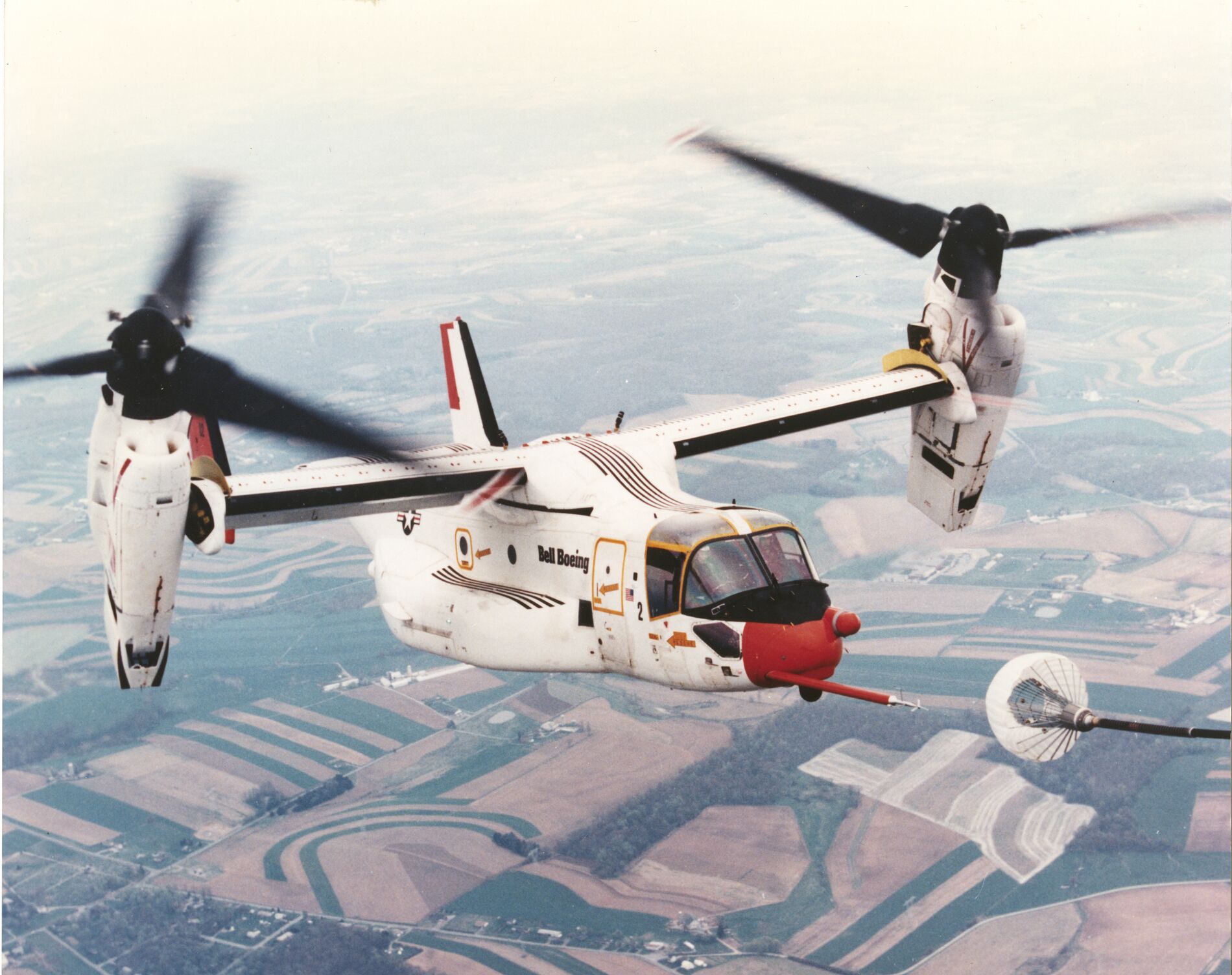
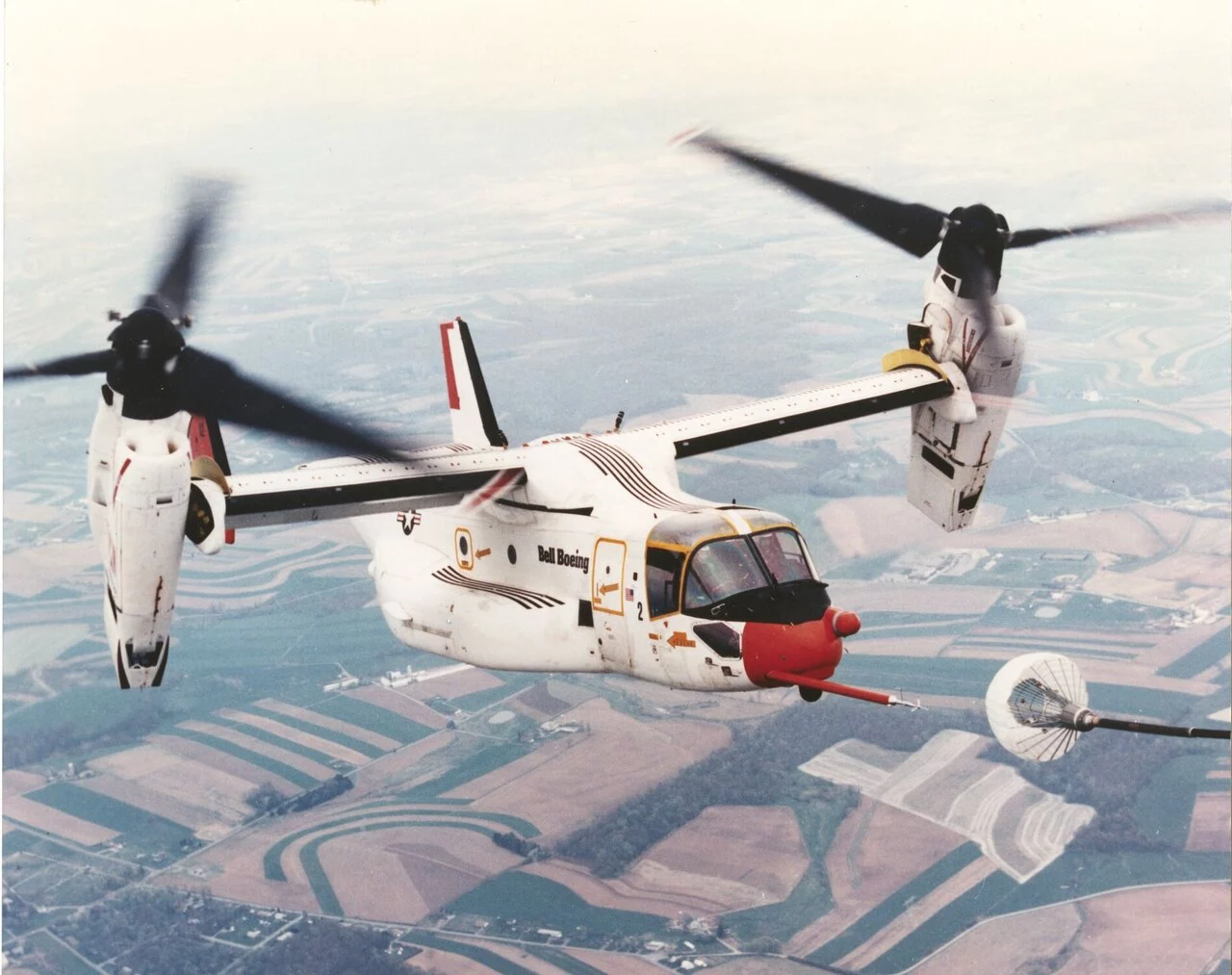
Lessons learned from the XV-3 led to the development of the XV-15, whose success served as the direct precursor to the Bell Boeing V-22 Osprey, a collaborative effort and the world’s first operational tiltrotor aircraft. The V-22 revolutionized military mobility by combining the versatility of a helicopter with the speed and range of fixed-wing aircraft.
jpg
Bell Boeing V-22 ship in air refueling
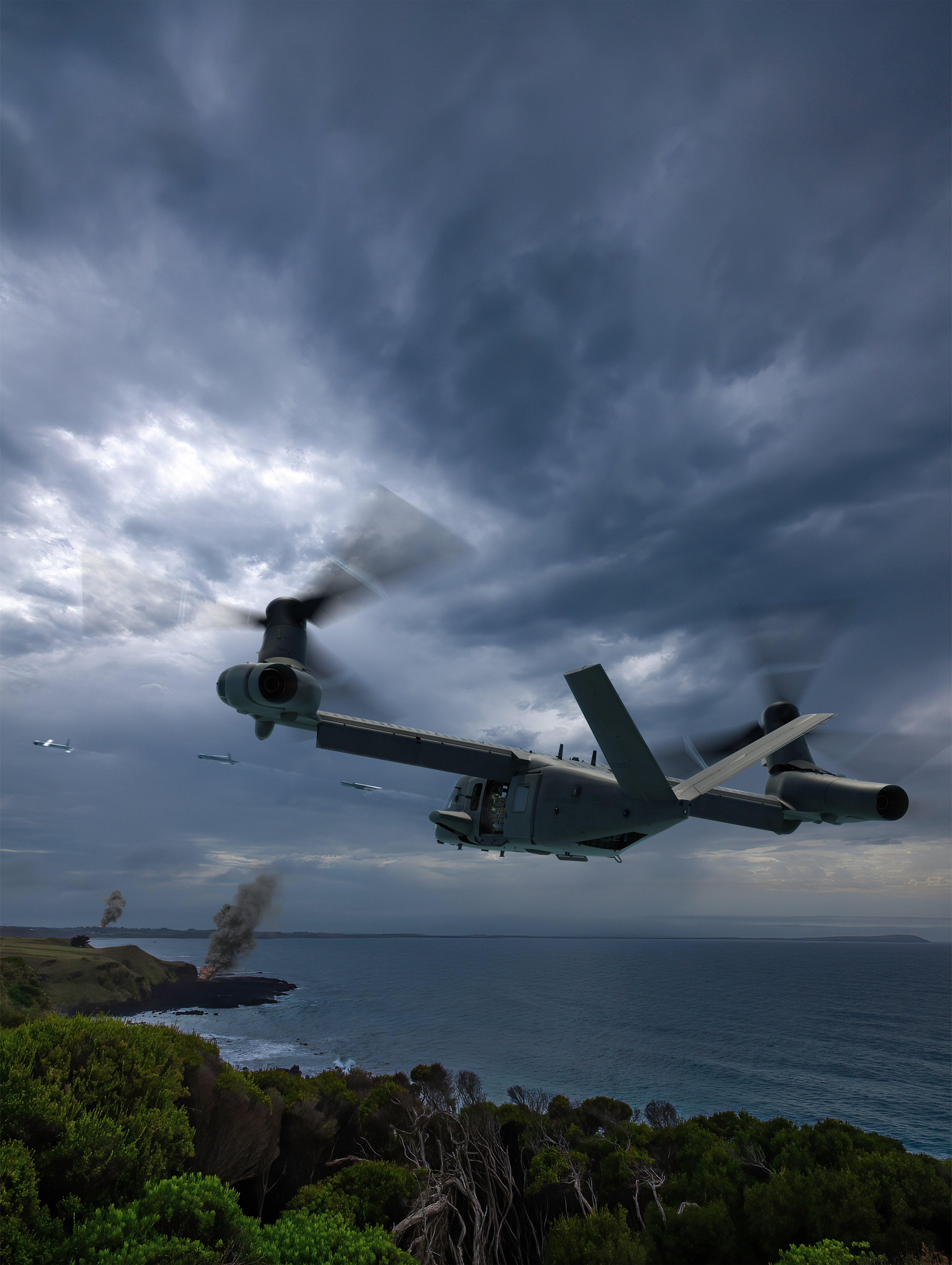
Bell continued that legacy with the V-280 Valor Advanced Vehicle Concept Demonstrator (AVCD), the winner of the Army's Future Long Range Assault (FLRAA) competition. Working closely with the Army, the V-280 has since evolved into the MV-75 Cheyenne and represents the next generation of tiltrotor technology.
Today, Bell builds upon its legacy of testing boundaries and revolutionizing vertical lift as it plans for the new X-76. With a designation deliberately calling back to 1776, this experimental aircraft is the product of DARPA and U.S. Special Operations Command’s SPeed and Runway INdependent Technologies (SPRINT) program. The program aims to achieve jet-like speeds while preserving the low-speed control and agility of a helicopter. Together, these continual advancements in tiltrotor and high-speed vertical lift lay the foundation for Bell’s broader efforts to expand mission capabilities across an ever-widening range of operations.
jpg
MV-75 Cheyenne
Expanding Mission Capabilities
From the 1970s onward, Bell continued to leave its mark on American aviation with aircraft known for their reliability and innovation. The UH-1 Iroquois, or “Huey,” became an enduring symbol through its extensive service in the Vietnam War and its adaptability across countless combat, medevac, and utility missions. Building on this foundation, Bell introduced the AH-1 Cobra, the world’s first dedicated attack helicopter, which redefined battlefield agility and set new benchmarks for support capability.
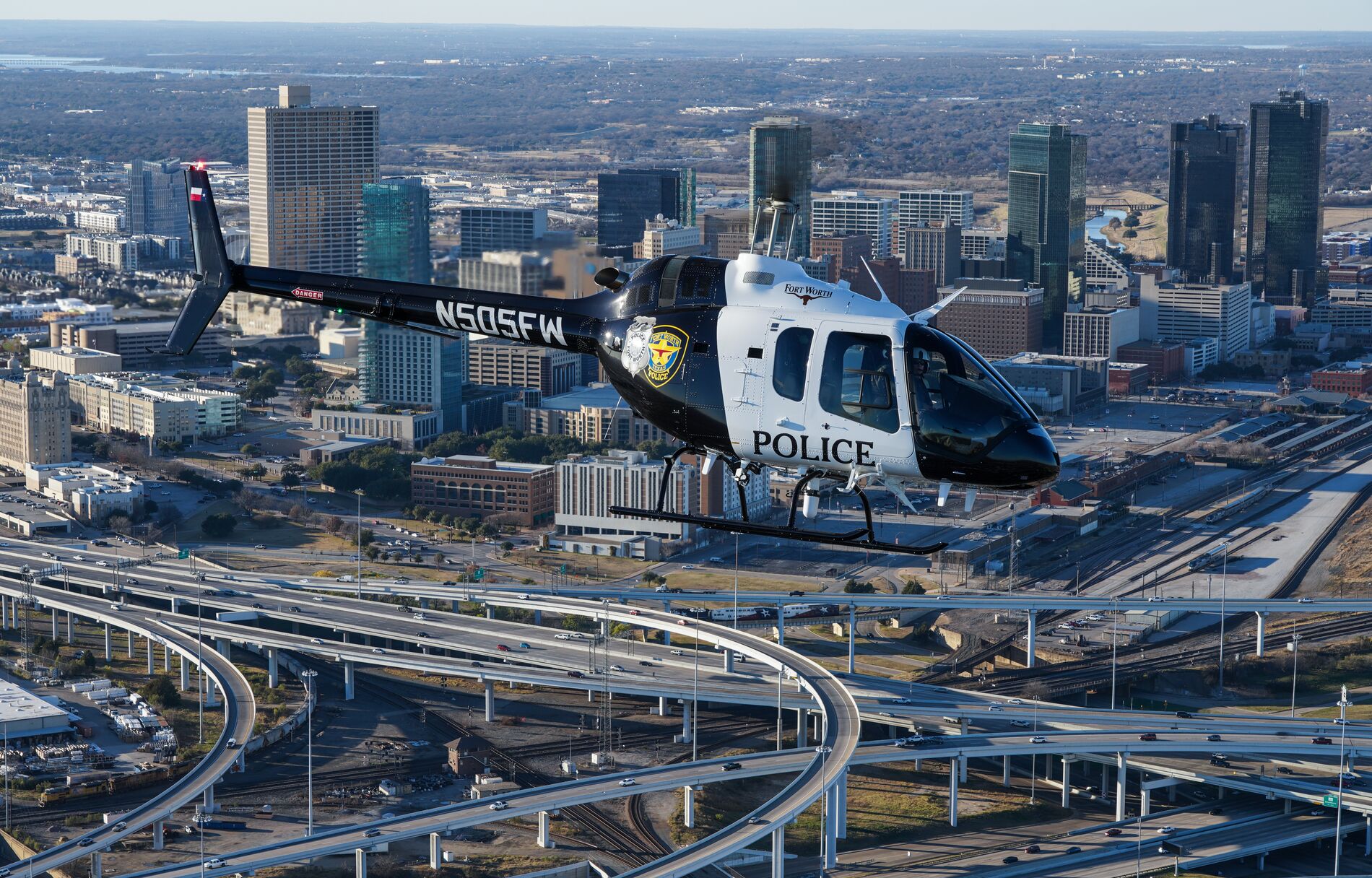
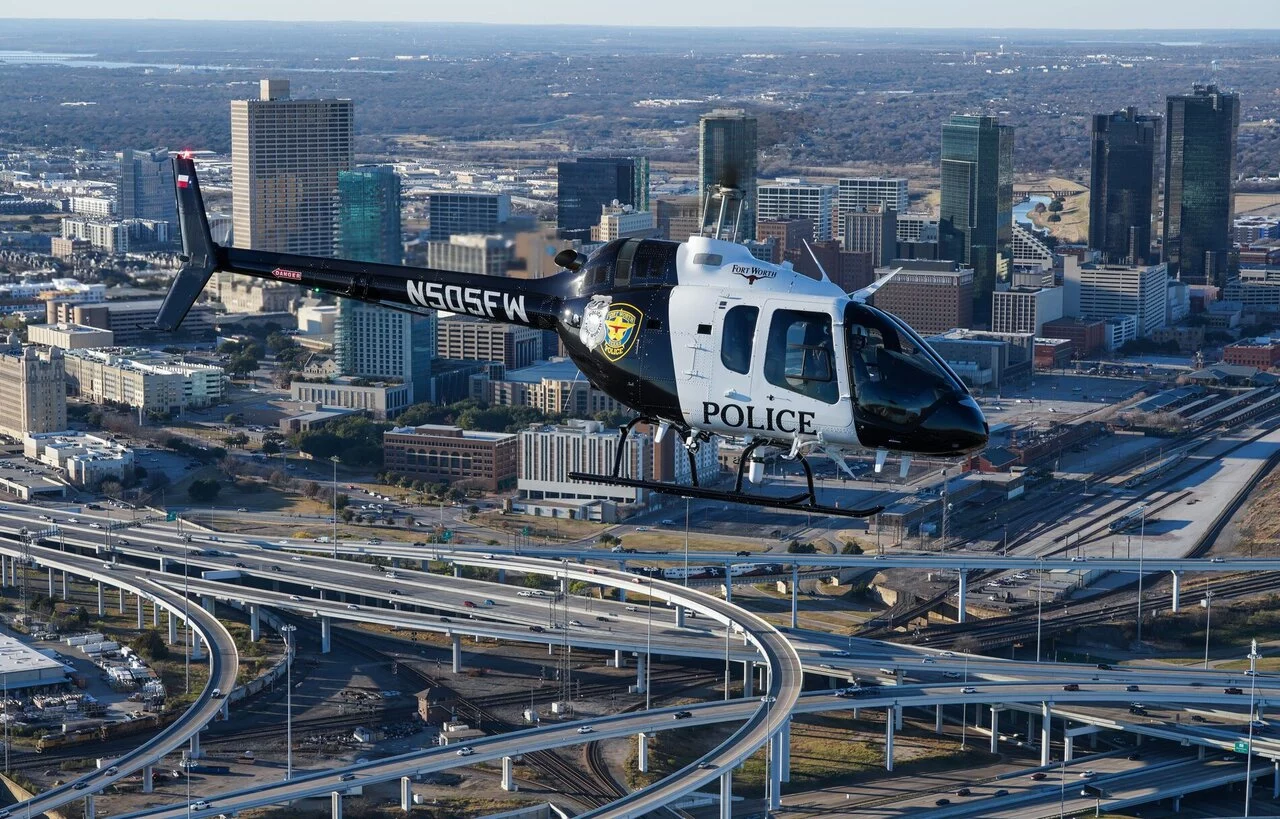
In the decades that followed, Bell expanded its portfolio with advanced commercial and military rotorcraft designed to meet an evolving range of missions. Modern platforms such as the Bell 407GXi, Bell 505, SUBARU Bell 412EPX, Bell 429 and Bell 525 support operations from emergency medical services to public safety, corporate transport, and special-mission work around the world. Together, these aircraft embody Bell’s ongoing commitment to delivering dependable, high-performance solutions for an ever-changing aviation landscape.
jpg
Bell 505, Fort Worth Police Department
A History of Hiring Veterans
The United States Department of Labor has recognized Bell with the HIRE Vets Medallion Award for multiple years in a row. Bell is proud to support those who have served our country and stays committed to hiring and retaining veterans. The company partners with Army PaYS, SkillBridge, and Hiring Our Heroes to extend resources for servicemen and women and those reentering the workforce. VORTEX, short for Veteran Outreach Through Employee Experience, is also a dedicated group within the organization, fostering the personal and professional growth of Bell’s veteran community. For more information on how Bell honors those who served, please visit Veteran & Military Programs at Bell.
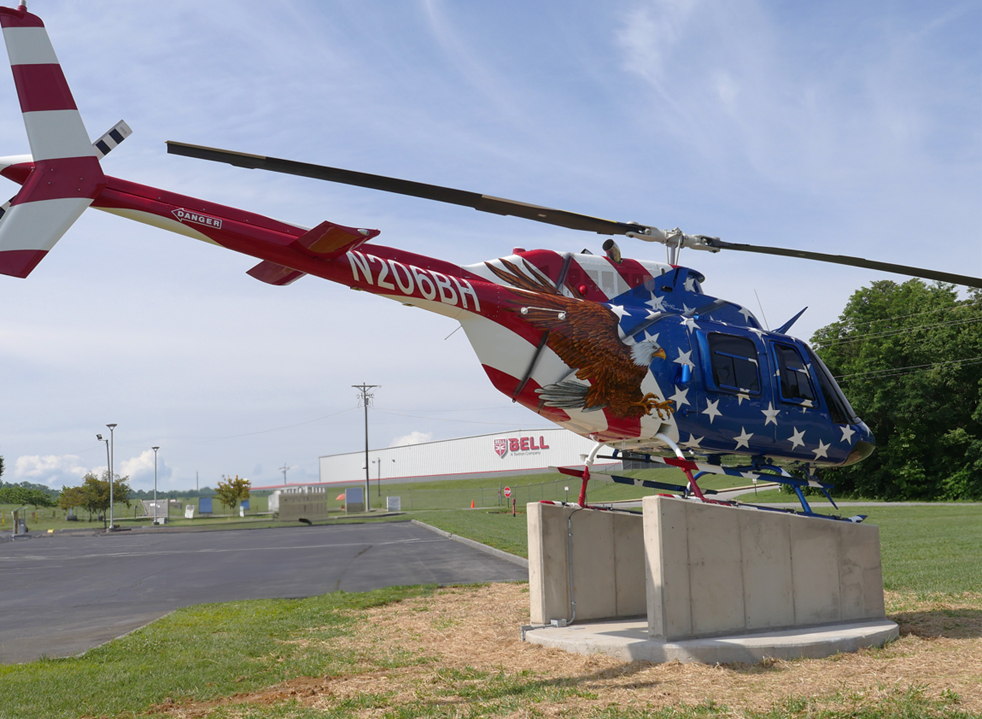
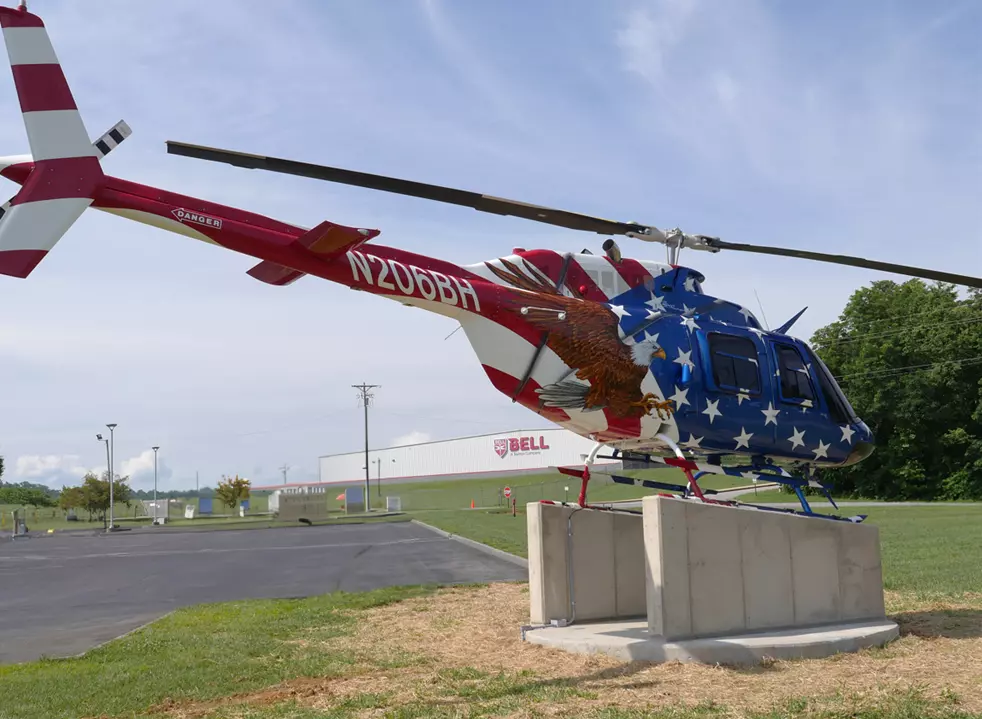
In commemoration of America’s 250th anniversary, a retired Bell 206 was put on display outside the Bell Piney Flats facility. The aircraft, built in Fort Worth, Texas, in 1968, boasts more than 38,500 flight hours, making it one of the most used helicopters in the country.
"The aircraft has a unique paint scheme on it. It was originally painted on that aircraft post 9-11 in commemoration of the events that happened then,” said Michael Greene, general manager Bell Flight Piney Flats. “It went back into service and was supporting our business needs and our customer needs out there. We thought, what better way than to take this retired aircraft and commemorate the country's 250th anniversary."
As America celebrates its 250th birthday, Bell’s continued commitment to innovation reflects the same spirit of progress that has defined America, opening new pathways in flight and shaping the future for generations to come.
On September 7, 1965, the Bell AH-1 Cobra took its maiden flight, setting the standard for attack helicopters. The concept for most well-known attack helicopter was born from a problem that faced ...



%20-%201969-c0c249-large_webp-1782999769.webp)

%20-%201969-c0c249-original-1782999769.jpg?download=1)